Software 2.0 Is Here
In January 2026, X opened their new feed recommendation algorithm.
In contrast to the previous algorithm, the new system has a single AI model in the middle. A Grok-based transformer model now reads every post and video to determine content to be shown in your feed.
It reminds me of the seminal article by Andrej Karpathy, Software 2.0. In his article, he explains how the traditional way of writing code (Software 1.0) has been replaced by neural networks (Software 2.0).
X’s migration is not just a platform update. It’s evidence of a paradigm shift. And I believe this is exactly what the future of software engineering will look like.
The Old School
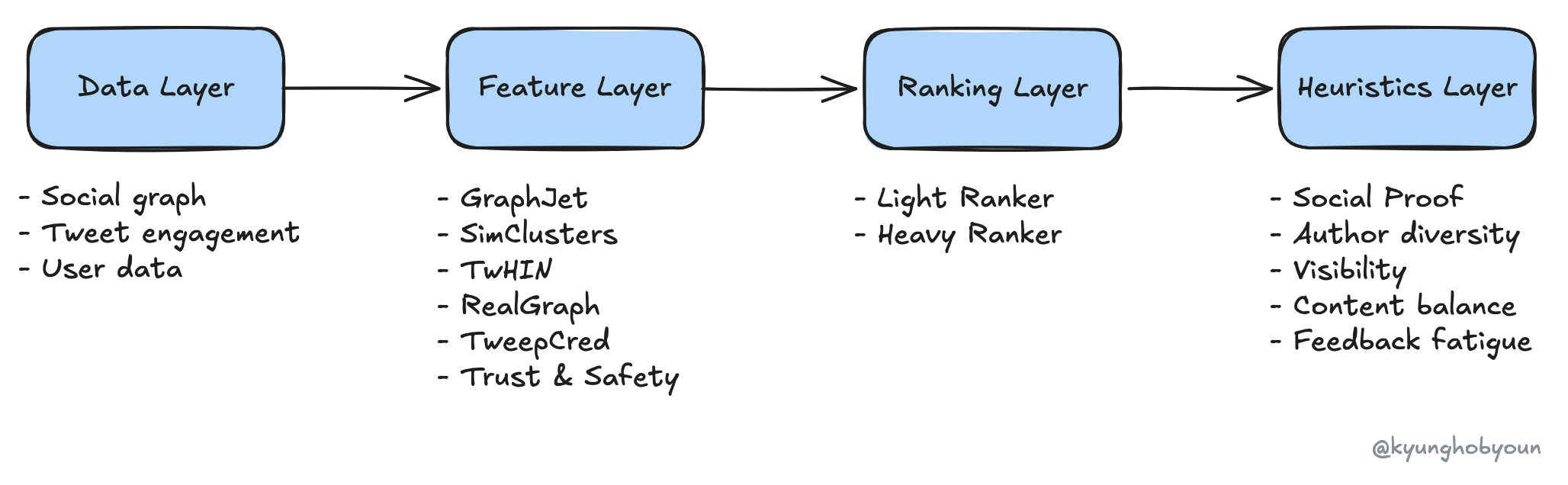
The primary goal of a recommendation system is to show people content they actually care about. Previously, this was done by feature engineering: engineers defined important features from intuition and ranked content by those features. The system was composed of two phases — extract features from data, then compute rankings from features.
X is a complex system composed of heterogeneous items like tweets, events, topics, and users, all interacting with each other. Over time, the system had become increasingly complex and rigid.
The Fix
After Elon Musk took over Twitter in October 2022, he stated the recommendation algorithm was the #1 priority of his engineering team.
There were two reasons.
First, the system required enormous operational cost. Musk’s first move was cost reduction. He promptly cut off components that caused computational inefficiency and laid off 85% of employees, including many engineers.
Second, he had complaints about X’s recommendation quality. The former algorithm was built on and rewarded by assumptions — called features. The result of recommendation, of course, could diverge from reality. But it was nearly impossible to change due to the system’s complexity.
After two years, they successfully replaced the system with Grok 4, the latest transformer model by xAI, trained on X’s own dataset. It takes users’ engagement history and predicts the probability of future engagement.
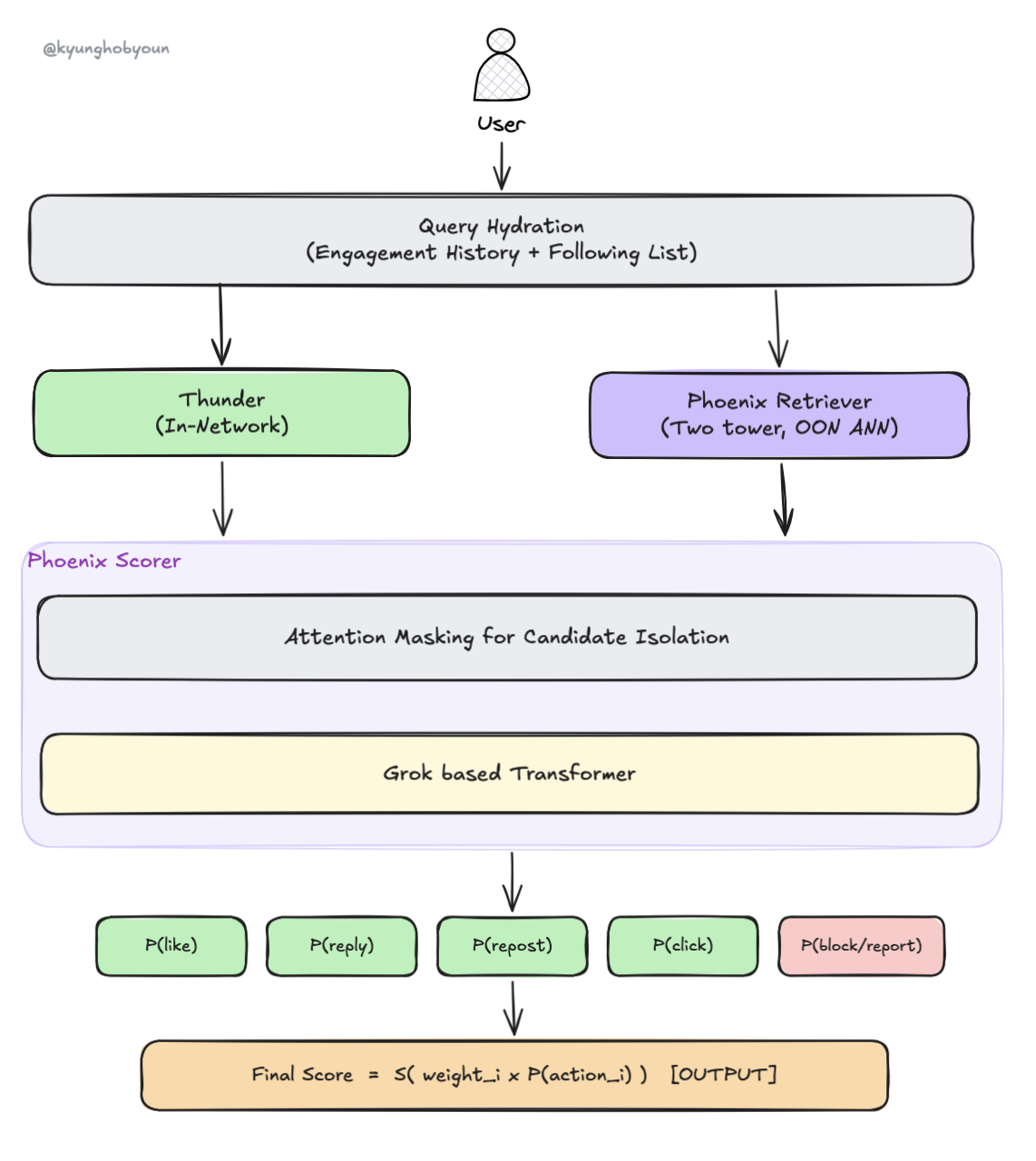
The new architecture is surprisingly simple. No graph. No Hadoop cluster. No feature engineering. And X’s engineering team is now targeting upgrades every 4–6 weeks.
The Paradigm Shift
X’s migration is a clear example of Software 2.0. They surgically replaced a decade’s worth of stacked heuristics with a single neural network.
This implies Software 2.0 is gaining larger economic value over 1.0. Musk acknowledges the new system is more expensive and slower than its predecessor — but it’s worth it.
In the future, more systems — from recommendation engines to operating systems — will choose neural networks over hand-written code, as hardware keeps getting cheaper and faster.
And it will change what software engineering is.
“Software 1.0 easily automates what you can specify. Software 2.0 easily automates what you can verify.” — Andrej Karpathy
The Cold Start
Data scarcity is the primary bottleneck for Software 2.0, because it requires a massive amount of training data.
It’s a chicken-and-egg problem.
If you need something better, you need data beforehand. And that heavily relies on business decisions. For example, Tesla gathered actual driving logs from its prototype Model S. They built a network that simultaneously produced logs from various environments.
All other businesses have been changing their privacy policies to collect data from networks they own. Vercel updated their terms of service to train their model on customer data unless users opt out. Adobe changed their policy in 2023 to utilize content from Creative Cloud.
Sufficient quantity and quality of data can only come from your own network. And retention will matter much more. Only businesses that genuinely provide value will survive.
In Software 1.0, the competitive edge was engineering talent. In Software 2.0, it’s the data flywheel — build something people use, collect what they do, train on it, repeat. The companies that figured this out early won’t just have better algorithms. They’ll have the only algorithms that matter.